Move boost pump to essential bus and consequences
Previous posts revise the structure of the essential and avionics bus
https://webuildplanes.com/adam-dickson-sling2/p/7326/need-for-two-additonal-circuit-breakers
It has also been decided to move the boost pump from the main bus to the the essential bus. This adds an extra 1A current draw to this bus.
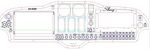
The bus structure is now:
The main bus will feed the following circuit breakers
- REG - regulator
- BK CHG - IBBS charge input
- START - start solenoid
- TAXI LT - taxi lights
- LDG LT - landing lights
- AP - autopilot servos
- STROBE - strobe lights
- NAV LT - navigation lights
- USB - USB/camera power supplies
The "essential" bus, which can be switched between the main bus and the IBBS battery output, will have multiple breakers:
- EFIS - which then feeds the (main) EFIS toggle switch
- AVNCS - which then feeds the AVNCS toggle switch
- FLAPS - flaps
- CB - cabin light
- TRIM - trim
- BOOST - boost pump
The switched side of the AVNCS toggle switch will now power the "avionics" bus, on which the following circuit breakers will reside
- COM - com radio
- XPNDR - transponder/ads-b in
- FLARM- flarm
- BK EFIS - backup efis
- HDST -headset
- IC - intercom
There is of course two remaining CBs
- BK OUT - output of IBBS backup
- MAIN BUS - feed to main bus from firewall forward
Consequences of shifting the boost pump to the essential bus
Total current draw is 2.345A when receiving, no flap actuations, rising to 6.745A when transmitting and actuating flaps, and rising to 7.745A when also activating the boost pump
If the EFIS is connected to this bus (EFIS switch "on") the following items are added
- SV-BAT-320
- SV-GPS-2020
- SV-ADAHRS-200
- SV-EMS-220
- SV-AP-PANEL
- SV-MAG-236
- SV-HDX-1100
Total addtional current draw is 2.96A rising to 3.96A when charging the SV-BAT-320
The total load on the essential bus can therefore be as large as 11.7A
The decision to place the boost pump on this bus might force some load shedding when operating from the backup battery so as to avoid popping the 10A circuit breaker placed at the output (not the fuse in the IBBS has been uprated to 15A, from 10A). It is likely that this tripping will not happen with any regularity since this large number assumes all of the following:
- EFIS SV-BAT-320 battery charging
- transmitting
- boost pump operating
- flaps actuating
One easy approach/policy is to turn off the main EFIS (and select operation from the backup battery) when one is powering the essential bus from the IBBS backup battery. In this case the maximum current drawn from the IBBS is at most 7.745A which is within the 8A continuous load rating of the IBBS battery, assuming all of the following:
- transmitting
- boost pump operating
- flaps actuating
Assuming just the fuel pump operating continuously, the current draw is 3.345A. At 6AH capacity this gives just under 2 hours of operation. In parallel with this the EFIS system running from the SV-BAT-320 will less than 1 hour of operation, so in practice some judgement as to load sharing will give the optimal result.
By placing the boost pump on the essentials bus, it is rightly being placed on the same level as the flap and trim as an essential component to full operation of the aircraft. In the spirit of aviate, navigate, communicate the electric fuel pump is regarded as an essential complement and backup for the mechanical fuel pump in the 912ULS during the landing phase following the loss of the main bus power. This is an "aviate" aspect which is regarded as taking priority over things like transmitting.
One result of this rumination is a design change - replace the standby/main switch - currently SPDT - with a DPDT switch. When the essential bus is powered from the IBBS backup battery, disconnect the SV-BAT-320 from the EFIS. In this was, when running from the IBBS the EFIS's own backup battery cannot be charged. By doing this the maximum current draw from the IBBS is reduced by 1A, to 10.7A when the EFIS switch is "on" and one is doing all of the following:
- transmitting
- boost pump operating
- flaps actuating
Author

Need for two additonal circuit breakers
This post is from Adam Dickson